

maintain

Cybersecurity protects more than devices.
It protects lives.

The biggest threat is where there’s the most growth.

Exploited vulnerabilities Disrupted patient care Blind spots
Connected medical devices are one of the largest and fastest-growing attack surfaces in healthcare.

99% of hospitals manage connected medical devices with known, exploited vulnerabilities.1

Medical device cybersecurity improves operational performance — and protects patient safety.

System-based intelligence that delivers secure outcomes.

Up to 95%
matching accuracy across connected medical devices2
75%
average reduction in cyber remediation time2
1,500+
cybersecurity vulnerabilities tracked in our management database2
100%
of Trimedx biomedical technicians’ complete CE CYBER Academy training2

The Trimedx difference

Our embedded clinical engineers understand each device's clinical context, so remediation never compromises the care that the device supports. The TMX platform's device intelligence layer combines real-time monitoring, the industry's most complete vulnerability database, and a live device risk score that quantifies and prioritizes risk against your specific inventory.

Most importantly, we act with urgency. Technicians issue work orders, apply validated patches, and implement compensating controls for the 60% of vulnerabilities with no OEM patch.2 This deployed expertise applied to cybersecurity delivers the ability to remediate, not just alert.

trimedx-difference
how-it-works-cybersecurity

How it works


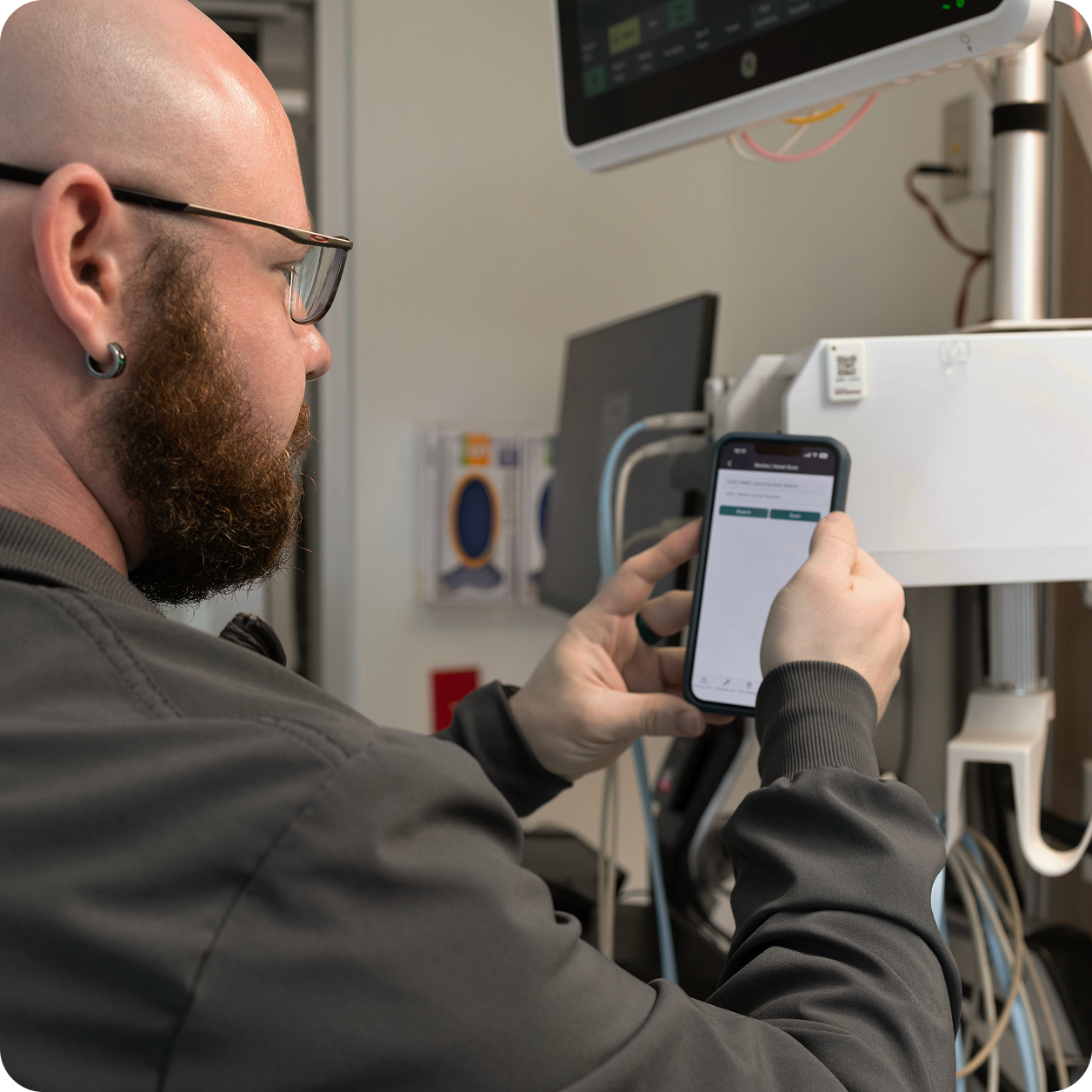
Embed: Our cybersecurity experts work with the same embedded teams that maintain and manage your devices, so security is built into clinical engineering, rather than bolted on.

Score: Real-time monitoring and our vulnerability management database feed our live device risk score, which weighs device behavior, mission-critical status, and known exploited vulnerabilities to tell you what truly matters and cuts the false alerts that drive alert fatigue.

Trigger: When a critical vulnerability surfaces, it triggers an automatic work order in RSQ.

Remediate: Cyber analysts consult on the right fix, apply OEM-validated patches where they exist, and build trackable compensating-control projects with IT where they do not.

Close the loop: Every action updates the risk score, creating true closed-loop remediation.

Our capabilities

  1. Device inventory & classification

    Match and classify connected devices with up to 95% accuracy, capturing ePHI capability, connectivity, and operating system accuracy.2

  2. Vulnerability assessment

    Draws on a database compiled from 80+ intelligence sources, matched precisely to your inventory.2

  3. Risk prioritization

    Live device risk scoring quantifies risk and ranks remediations by clinical impact, not generic severity.

  4. Remediation workflow

    Work orders are issued through RSQ, integrating cyber action with ongoing device maintenance.

  5. Compliance reporting

    Track vulnerabilities and remediation projects in Clinical Asset Informatics, with subscription alerts for stakeholders.

  6. Incident response

    Embedded analysts respond fast to critical vulnerabilities and anomalous behavior, taking an active role in remediation.

cybersecurity-stat-1
$15B+
total healthcare cost of downtime due to ransomware attacks in 2023.3
6-in-10
healthcare companies have been hit by ransomware attacks in the past two years as of 2025.4

Cybersecurity: closed before it's a breach.


Clinical engineering keeps every device performing: maintained, inspected, and ready before anyone has to ask.

Clinical asset management turns the whole fleet into a decision: what to keep, what to replace, what to stop paying for.

Cybersecurity finds the exposure in every connected device, then closes it before it becomes a breach.

closed-before-1